


- HOME
- >
- PROJECT
- >
- Researcher Profile
- >
- The extraordinary world of festivals: Anthropology as a relational medium that brings people together – The future of social relationship from the perspective of “en(縁)” and collective entities –(Assoc. Prof. Kengo Konishi)
The extraordinary world of festivals: Anthropology as a relational medium that brings people together – The future of social relationship from the perspective of “en(縁)” and collective entities –(Assoc. Prof. Kengo Konishi)
2026.02.17
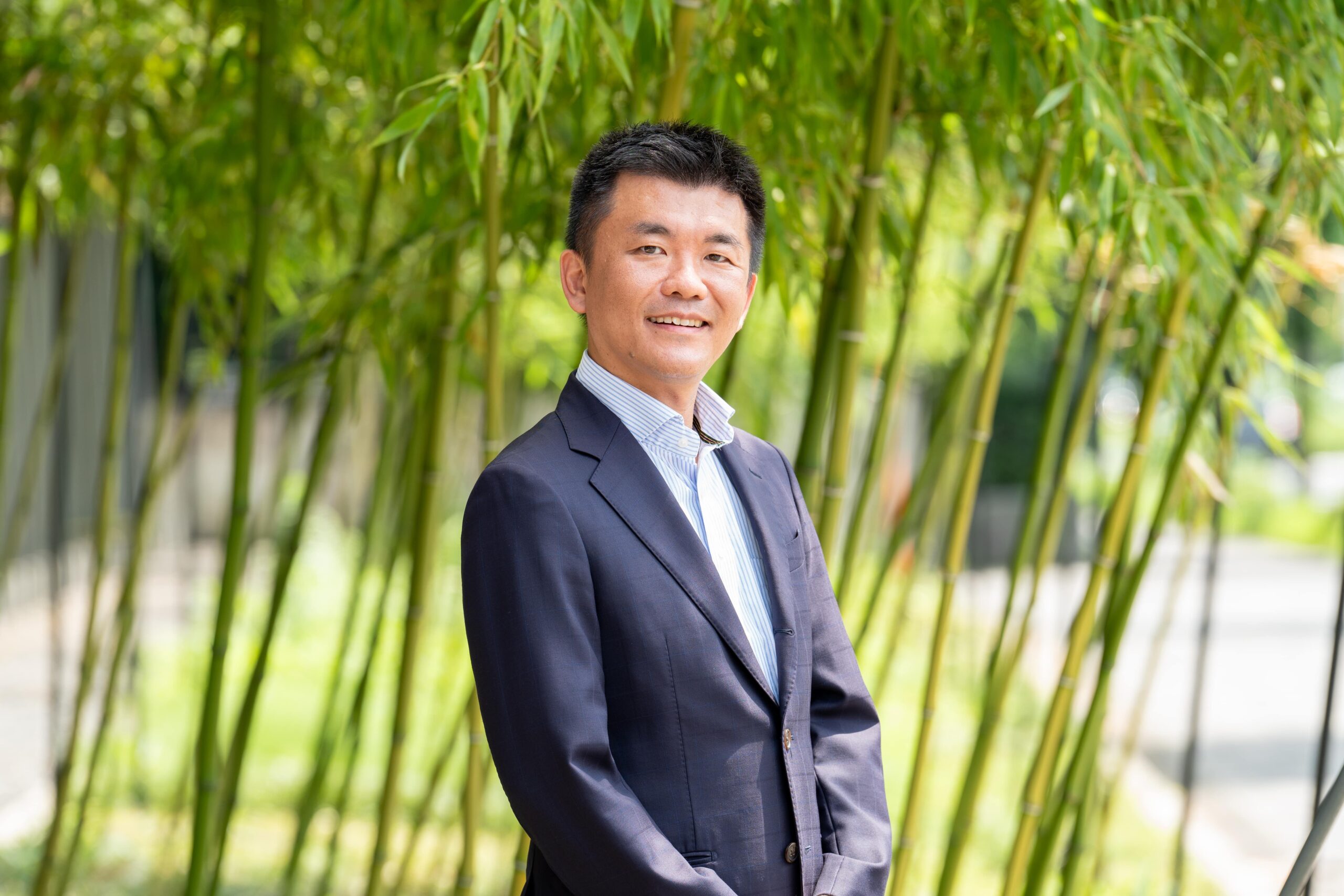
Travel and Curiosity About the Unknown: The Beginnings of My Research Journey
From the time I was very young, I have always loved traveling. When I became a primary school student, I was overjoyed to finally be able to ride trains by myself to make my way to various locations, and during my later student years I traveled to Hokkaido with a Seishun 18 Kippu (Youth 18 Ticket) and even toured the whole of Japan. This love of travel is directly tied to my current research. Ever since I was a child, I have been fascinated by researchers, and during my high school years I developed a vague sense that I wanted to study matters related to culture myself. On the other hand, I wasn’t all that interested in focusing on one specific area of study. To this day my view on research is that, rather than devoting myself to just a specific area of study, I have always wanted to combine different academic fields in order to solve my own problems and problems affecting society. Thus, I was drawn to and decided to enroll in Kyoto University’s Faculty of Integrated Human Studies, where people from both the humanities and sciences come together to study a diverse range of topics and disciplines together. It was by going through these turns and twists that I ended up in the field of cultural anthropology.
Something that propelled me to go in this direction was a part-time job for the Gion Festival during my undergraduate years. Because I was raised in an emerging residential area in Amagasaki City, Hyogo Prefecture, I had virtually no first-hand experience participating in local festivals. Upon gaining exposure to Kyoto’s Gion Festival for the first time, I was struck by how incredible it all was. I recall getting goosebumps the moment I saw a giant float move through the collective power of everyone working in tandem. But what I was fascinated by more than anything else was the way in which the entire town transformed into one shared extraordinary space. Especially impressive were the Western tapestries adorning the festival floats on the eve of the main festival and the musical performances that were held inside traditional townhouses. Rather than just a typical example of Japanese traditions, the festival managed to create an extraordinary setting by combining diverse elements. Moved by the realization that such worlds exist, I came to wonder what meaning such extraordinary spaces could hold for human beings.
Undoubtedly, my innate love of travel also played a part in pushing in this direction. In my second year as an undergraduate student, I visited China for the first time in my life. I set off for Shanghai from Kobe by ship and spent three weeks in Xi’an and Beijing. It took me three days to arrive and the trip was relatively affordable thanks to a student discount I was able to take advantage of. But when I look back at this experience now, I see that it was a trip that the incredible energy of the country overwhelmed me. With English being hardly understood and my sparse Chinese being quite incomprehensible to locals, I remember returning to Japan completely exhausted. The frustration I felt drove me to begin studying the Chinese language in earnest upon my return.
Despite my love of travel and having an interest in immersing myself in different locations, it was not necessarily the case that I was good at communicating with others. Cultural anthropology is characterized by fieldwork that involves staying in a given area for an extended period of time and engaging in participatory observations while living among the local people. Kyoto University’s distinctive anthropological tradition maintained deep ties to explorers and mountaineers and was home to many “hard-core” researchers who would embark on journeys into savannahs and rainforests all on their own. While I was constantly anxious about whether I could handle such fieldwork myself, I ultimately committed myself to the discipline after a professor told me, “There’s nothing quite like the thrill of grappling with reality.”
For my thesis, I researched the souvenir gifts that can be purchased in Kyoto. Back then, anthropological research on tourism was all the rage. Some researchers claimed that the tradition and culture seen at tourism sites had been changed to attract and entertain tourists. I became increasingly interested in this topic because I sensed a gap between my experiences in everyday student life and the atmosphere at tourism sites. I was determined to investigate how souvenir gifts reflected Kyoto’s image and visited souvenir shops situated in the vicinity of Kiyomizu-dera and Kinkaku-ji temples, all while earnestly noting down the items they sold and speaking to the souvenir manufacturers. I was so diligent that I probably looked like a spy working for a rival business [laughs]. Many of the anthropologists I was working with at Kyoto University were professors with a background in the natural sciences, and as such they taught me not just methods related to the arts but also that I should measure and collect data through numbers. And so I somewhat faithfully cataloged hundreds of products sold by souvenir shops and quantitatively analyzed their designs. This revealed something very intriguing. A substantial number of souvenir gifts that can be purchased in Kyoto consist of items that have no connection to Kyoto whatsoever (such as posters of idol celebrities or mysterious wooden swords). Perhaps it was that items other than those clearly associated with Kyoto helped define the atmosphere at tourism sites? My data supported the conclusion that the extraordinariness of tourist spaces is produced not by their external image but by the diversity and eclectic assortment of items found within themStrangely, I realized this was also linked to the sense of the extraordinary that I felt on the eve of the Gion Festival.
The moment when new facts emerge from the materials you gathered on your own is truly thrilling. I did not hesitate to go on to graduate school and gave very careful consideration to the research topic to which I would be devoting myself. Unable to muster the courage to go off to some savannah or rainforest, I felt that I wanted to continue my study of festivals and tourism. And if this was the path I was going to take, I thought that I might as well go visit someplace that I had never been to before, to which I was not connected. Accordingly, I decided to go to Tohoku, which was about as far away from Kansai as you could get. And that is where I came across the Kakunodate Festival in Semboku City, Akita Prefecture.
Kakunodate Festival: Festivity, Ambiguity and Diversity.
In the summer of my first year of master’s studies in Northeastern Japan, I went to experience a number of festivals as a way of conducting preliminary research. But the Kakunodate Festival (specifically, the festival float parade for the Kakunodate Festival) was special. Having been designated an intangible cultural heritage by UNESCO and an important intangible cultural property by Japan, it is a very famous festival but, when seen from the outside as a tourist, much of what is being done may be more or less impossible to grasp. Unlike the Gion Festival, the parade route is not determined in advance. Eighteen “Yama”, or festival floats, move independently and freely throughout the town. All sorts of strategies come into play as the event unfolds. For example, when two yamas encounter one another, a negotiation to determine which one can proceed first commences. Negotiators donning yellow cords to tuck up their sleeves engage in fierce exchanges with one another in the local Akita dialect. If these talks break down, the matter will be settled through a deliberate collision of these yamas in what is known as yamabuttsuke. No thought whatsoever is given to any nearby spectators. Only the participants themselves understand the contest at hand and indeed immerse themselves in it with unbridled joy. And it was precisely because I had no idea what was going on that I became increasingly interested in this spectacle. This festival consists of a vast number of unwritten rules, and as these rules are steeped in ambiguity diverse actions may arise. Figuring out how the excitement of this festival emerged came to be the focus of my master’s thesis.
In conducting fieldwork, I had the good fortune of meeting the president of Ando-Jyozo, a company that produces miso and soy sauce. He was a Kyoto University graduate as well and through this connection I was able to spend three years conducting fieldwork while living rent‑free and working part‑time at his company. When carrying out fieldwork, you set out to observe and thoroughly record everything while you simultaneously act and participate in activities alongside local residents. Unsurprisingly, this requires not one or two days but quite an extended period of time. I slowly amassed data in the course of taking inventory as a part-time worker for the business, cleaning festival floats as an underling to a group of young people and drinking the nights away. It was through these experiences that I came to understand nonverbal contexts that even locals find impossible to put into words, such as the emotions that well up when the festival becomes incredibly lively or the feeling of tension that arises whenever danger is sensed and that compels everyone to move in a certain way in response to a shift in the prevailing mood. This is where cultural anthropology becomes truly fascinating. It is said that fieldwork is the process by which one undergoes a transformation in body and mind over an extended period of time. You grasp local contexts through physical experience. That is precisely why you cannot understand the reasons behind people’s enthusiasm about festivals simply through word-based interviews; instead, you must absorb them on a visceral level. I came to be intertwined with these contexts. I believe that people feel that they have some kind of connection, or en in Japanese, to something when they become swept up in the given situation by the location or the existence of key individuals, even before any deliberate intent to do so is ever formed. When that happens, a connection is inevitably made. Being drawn into this festival and attending it for many years led to my current research. The anthropology of en and collective bodies, my current research focus, emerged from these experiences I made in Kakunodate.
Collective Bodies: Approaching the Intermediary Realm Between Individuals and Communities
While the number of people holding festivals among Japan is declining as the population of the country shrinks, there are still many festivals that continue to thrive every year, including the Kakunodate Festival. However, most festivals are no longer able to continue operating with just the participation of local residents. For this reason, it has become necessary in recent years for these festivals to be held with the help of people from outside the local area. It can be said that the key to the survival of a festival lies in the ability to involve people who are neither connected to the town nor related to one another. For this reason, I believe that experiencing the excitement of these festivals together with others in person is vital. Rather than merely thinking about festivals logically, the very act of doing something together with others becomes the driving force for involving people. In my research, I have tried to describe this process with as much nuance as possible. For example, I collect and document data by capturing and recording answers to such questions as: How many people are participating per hour? How does excitement arise from and become shared through minute interactions? How are people engaging in a division of roles?
What became apparent was that festivals form the basis for regional ties that go far beyond the level of communities. In order to grasp this, we need to understand the mechanisms by which emotions and affects are shared. This entails placing a focus on what exists between individuals and the community, which is something that has not drawn much attention in anthropology to date. I refer to this as the collective body. The collective body is not limited to just traditional festivals; it can also be seen at music festivals, in the stands at sporting events, and in other such contexts. Elements imbued with a certain type of sanctity, such as shrines and deities, constitute the core of festivals, but other elements can play a similar role. For example, tradition can also be a part of music festivals, and the field and ground at high school baseball tournaments is often treated with veneration. I believe that elucidating the mechanisms by which a collective body becomes a medium for links among people who are neither connected nor related is a theme that goes beyond anthropology alone – it should be examined from an interdisciplinary perspective and developed to address a wide range of societal challenges.
About two decades have passed since I began investigating festivals. I have undeniably grown into a middle-aged man in that time [laughs], such that my standing when it comes to festivals has also shifted from that of a young member to taking on a mid-generation role. By being involved for many years in the field, I notice that the landscape has also changed. I feel truly fortunate to come across a theme I could spend my whole life pursuing. . I believe that this is the appeal of engaging in fieldwork in the area of anthropology. I want to update the paper I wrote twenty years ago to reflect the experiences I have had since then. As part of this process, I would like to also consider the future of festivals and the communities in which they are based. While festivals are a source of local identity for certain areas, many of these communities have been left largely without children or young people. With portable shrines unable to be carried because of an aging population, some festivals have even ceased to exist. Realizing such as threat, it is not surprising that there are people who would like to do whatever it takes to ensure that festivals can continue. The existence of a place that offers a thrilling sense of enjoyment and uplifting experiences to people even as they get older does not just serve to protect the community but may also support the formation of new ties in a society whose population is shrinking. I feel that I was able to obtain this perspective not by just pursuing a single research project but by expanding my horizons through my involvement in many different fields.
Anthropological studies on Tibetan Bon religion: Exploring the fundamental commonality of different cultures.
While my research journey began in Japan, I turned to Tibetan studies after entering my doctoral program. It has been nearly two decades since I first visited Tibet. I came across this research topic by way of a chance encounter. When I visited eastern Tibet for the first time (the mountainous region of Sichuan Province), I saw a temple sparkling brightly from the window of the bus in which I was traveling and felt strongly drawn to it. After arriving at the last stop, I borrowed a bicycle and set off to explore the temple I had spotted earlier. In hindsight, cycling back up the same road at an altitude of 3,500 meters above sea level was certainly ill-advised [laughs] but the location was truly pleasant and I fell in love with it at first glance. By a curious coincidence, a Tibetan professor who had been invited to teach at Kyoto University’s Faculty of Letters happened to be from the area I was visiting. He was a leading expert on Bon, Tibet’s indigenous religion, and had taught me all sorts of things about it. The sparkling temple I had spotted was a historic Bon monastery. I later went to study at a university in Chengdu, Sichuan, where I carried out research for my doctoral thesis and conducted fieldwork on Bon temples. During my time in Sichuan, the Chinese language that I had been studying since my undergraduate days proved incrediblyu useful. Everything in life is connected in some way, it seems.
The goal of a doctoral dissertation in the field of anthropology is to produce a comprehensive ethnography of the research subject. Producing an ethnography means to depict the field of study from diverse perspectives and to grasp an overall picture of it through your own lived experiences. For instance, taking festivals as a way to illustrate this point, I would say that you need to look at their social contexts and historical connections. My major research topic was the process by which religion was revived in contemporary Tibet. I developed a meticulous narrative: the vertical axis corresponded to the restoration of temples beginning in the 1980s after the Cultural Revolution and the reorganization of regions through economic growth since the first decade of this century, whereas the horizontal axis corresponded to the realities and transformation of the daily lives of people and the spaces in which they could collaborate with one another. In the field, I grappled with difficult texts while learning the Tibetan language from scratch and living alongside monks. Dealing with cultural shock was part of my daily routine. It was an experience that differed completely from the fieldwork I had been conducting in Japan, where I knew my way around to a certain degree. Certainly, more than once I stopped to wonder what I was doing in that place. What gave me the strength to persist was the fact that there were very few researchers engaging in the anthropological study of Bon in the world. The frontier spirit of doing something nobody else was doing was also valued by the department of Anthropology at Kyoto University, and I felt that the ability to chart a course through a completely new field of study by harnessing my own experiences and thinking was what made scholarship in the humanities worth doing.
Engaging in Tibetan studies also allowed me to establish ties with researchers in various other fields. In order to properly understand Tibetan culture and its vast accumulation of texts, you need to collaborate with Buddhist scholars and historians. The cooperation of linguists is vital for interpreting regional dialects. Leaving Tibet to further pursue my study of Bon led to encounters with all sorts of people in India, Nepal, Bhutan, and France. I believe that these were all “en” formed through my research. Twenty years ago, I had no intention for any of this to happen.
It was against this backdrop that I turned my focus back to Japan. Unsurprisingly, the part of my doctoral dissertation that I was most passionate about was the section concerning festivals. In Tibet, pagodas are known as chortens. As with five-storied pagodas found in Japan, these pagodas can trace their roots to Indian stupas and are known for housing Buddha’s ashes and other sacred relics. At the chorten whose construction I investigated, people made offerings of grains, fragrant wood, clothing, rice cookers, and other items of daily living. These acts were accompanied by the sort of extraordinary excitement normally associated with a festival. Contributing something that essentially amounted to a part of one’s own life represents the highest offering one can make at a place to demonstrate your religious devotion. While chortens are said to protect the villages in which they are located, this belief is not simply something that is borne from religious doctrine. There is a very real sense on the part of everyone that this effectiveness arises precisely because their own money has been contributed.,. This realization also emerged from my experience studying festivals. In addition, various physical techniques of religious practice such as meditation have been preserved in Tibet. Gathering at temples to chant sutras together or sharing emotions while listening to prominent lama’s sermon alongside others—even without being especially esoteric in nature—can be truly described as manifestations of the collective body. What I want to explore through my research is the fundamental commonality that is possessed by humans and that transcends differences among individual cultures.
The societal significance of research and an outlook on the Institute for the Future of Human Society
In contemporary Japanese society, depopulation is ongoing because of low birth rates and an aging population. It is said that Japan is a society in which individuals are isolated and have weak personal ties with one another (as captured in the term muen-shakai, “a society lacking en”). I see en in terms of two aspects. En predicated on the notion of muen-shakai are connections based on ties to a region and blood relations – in other words, social relationships. Once such connections weaken or become severed the individual is set adrift. However, connections go beyond just social relationships. There are also connections that arise from chance and fate.
Even if people become separated from their families, regions, places of work, or other ties, they can still encounter others. The development of network technologies has led to the expansion of such encounters on a global scale. Theories that have been put forth to date have not properly explained the relationships that form among people who are neither connected nor related to one another. The fact that festivals are supported not just by regional connections but also by people who are drawn together by chance to form links with one another is due only to the practices of collective bodies committed to doing things together. This speaks to the importance of serendipitous encounters. I believe that the major societal significance of my research can be found in efforts to academically elucidate how such a sense of community is formed.
I am currently engaged in the “Noto Marumaru University”, a project to create local learning and social spaces using a Buddhist temple in an area affected by the Noto Peninsula Earthquake. In this project, we are collaborating with people working on local disaster recovery and regional revitalization at a community level. Among the areas that I have visited are villages where the number of households was halved because of the earthquake. More than a few of these villages consisted of residents who were all over the age of sixty, lacking young people even before the disaster struck. Amid such harsh circumstances, people sought to at least make sure festivals could continue to be held and to preserve their community in an environment that was challenging to the utmost. Now, supporters and people wishing to establish hubs of community revitalization have joined these places. My research intersects with societal challenges in precisely these sorts of activities. I wish to harness theoretical knowledge (that is, the anthropology of en and collective bodies) and examine in practice how individual aspirations and community ties can be sustainably integrated and revitalized in light of contemporary challenges such as population decline and disasters.
At first glance, it may appear as if the fields and topics discussed to this point are rather disjointed, but they are tied together at a fundamental level. When I look back on my research activities to date, I believe they were possible precisely because of the en I enjoyed, and I feel that I will continue to experience various kinds of serendipitous encounters going forward. En is a concept that can be traced to Buddhism, that appears across many languages in Asia, and that resonates among young and old people alike. Despite its importance, it appeared so obvious that at the same time it was elusive to many. Can it be understood through the body or senses? I believe that such questions arise within the exceptionally thrilling realm in which knowledge from the humanities and social sciences intersects with approaches put forth by the natural sciences. Even in a world beset by increasing divisions, people will always encounter one another and achieve things together. I am constantly struck by the sense that there is no better place for exploring the dynamism through which encounters can lead to new relationships than the Institute for the Future of Human Society, where diverse researchers come together to form en that transcend disciplinary boundaries. I would like to continue to engage in activities by taking a twofold approach involving both research and practice that concern the future of social relations.
Other related articles
-

2026.02.17
The extraordinary world of festivals: Anthropology as a relational medium that brings people together – The future of social relationship from the perspective of “en(縁)” and collective entities –(Assoc. Prof. Kengo Konishi)
-
2026.01.10
祭という非日常、多様な人が関わる文化人類学 ―縁と集合的身体から考えるつながりの未来―(小西賢吾特定准教授)
-

2025.10.21
Understanding Happiness Through Cross-Cultural Psychology (Prof. Yukiko Uchida)