

- HOME
- >
- PROJECT
- >
- Collaborative Research Projects
- >
- Deconstructing the Production of Knowledge on the Kurds and Kurdistan
Deconstructing the Production of Knowledge on the Kurds and Kurdistan
2026.01.28
Project representative:
Mostafa Khalili(Program-specific Assistant Professor/Center for Southeast Asian Studies/Hakubi Center)
Collaborating researchers and co-researchers:
・Mashuq Kurt(Associate Professor/Royal Holloway/University of London)
・Akihiko Yamaguchi(Professor/Faculty of Global Studies/Sophia University)
・Yasuyuki Matsunaga(Professor/Foreign Studies/Graduate School of Global Studies/The University of Tokyo)
・Abdurrahman Gülbeyaz(Associate Professor/Faculty of Multicultural Sociology/Nagasaki University)
・Tatsuya Abe(Doctoral Student/Faculty of Global Studies/Sophia University)
Introducing this project
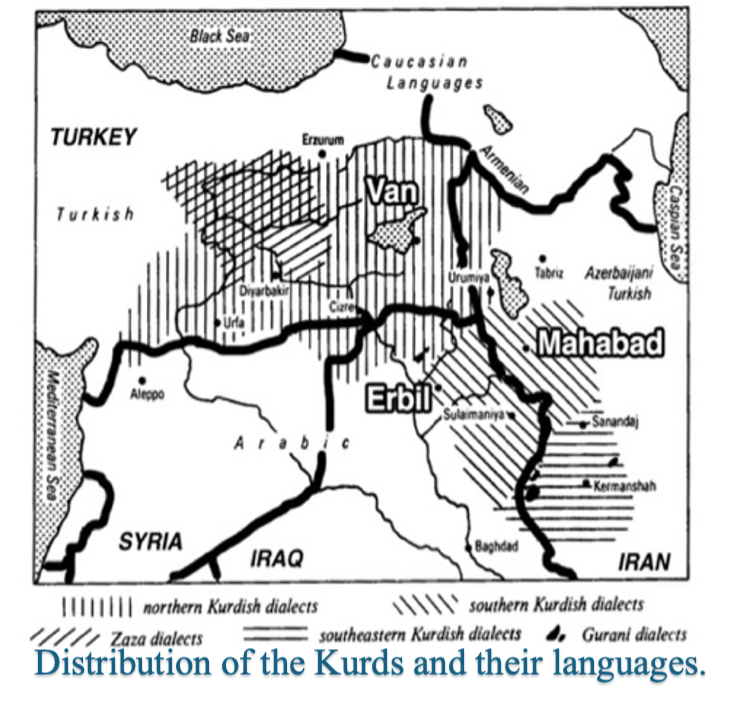
This project explored how knowledge about the Kurds, a large ethnic group without a nation-state, has been produced, shared, and shaped across different societies. It focused on how history, politics, and power influence the way the Kurds and the region known as Kurdistan (which includes parts of Iraq, Iran, Turkey, and Syria) have been studied in both Western and non-Western academic settings. Many existing studies on the Kurds have been shaped by colonial ideas or government narratives. This project asked an important question: Can countries outside the West, like Japan, offer new and more balanced ways of studying and understanding Kurdish society?
To explore this, an international workshop was held at Kyoto University in November 2024 under the title “Decolonial Turn and Methodological Challenges in Kurdish Studies.” The event brought together researchers from Japan, Europe, and the Middle East. Discussions focused on how political power and academic traditions influence research, and how to rethink these frameworks to create fairer, more inclusive studies of minority groups like the Kurds.
As part of the project, a public lecture was held at Tokyo University of Foreign Studies, where Dr. Mashuq Kurt (Royal Holloway, University of London) presented research on youth radicalization and political violence in border regions between Turkey and Syria. In October 2024, a special CSEAS Eurasia Seminar on Kurdish politics during the Cold War was also held. Dr. Siarhei Bohdan (Hokkaido University / University of Regensburg) and Dr. Angelika Pobedonostseva (Saint-Petersburg State University) discussed Kurdish guerrilla movements and Soviet Kurdish policies in Armenia and Azerbaijan, based on rare archival materials and interviews.
Through these events, the project promoted open academic exchange and encouraged new international collaboration by helping to reshape how scholars think about Kurdish identity and knowledge production in the modern world.
Other related articles
-
2026.02.25
The Role of Art and Culture in Health and Well-being: Social Implementation Using the INNATE Framework and Positive Health
-
2026.02.25
アート/文化と健康/ウェルビーイング- INNATE Frameworkとポジティヴヘルスを用いた社会実装
-
-672x372.jpg)
2026.02.25
Resilience in Comfortable Authoritarian Powers—A New Comparative Perspective on China and Russia